
NEW DELHI | Editorial
"THE POSSIBLITY OF PARRALLEL UNIVERSES"
The Possibility of Parallel Universes
Introduction to the Multiverse
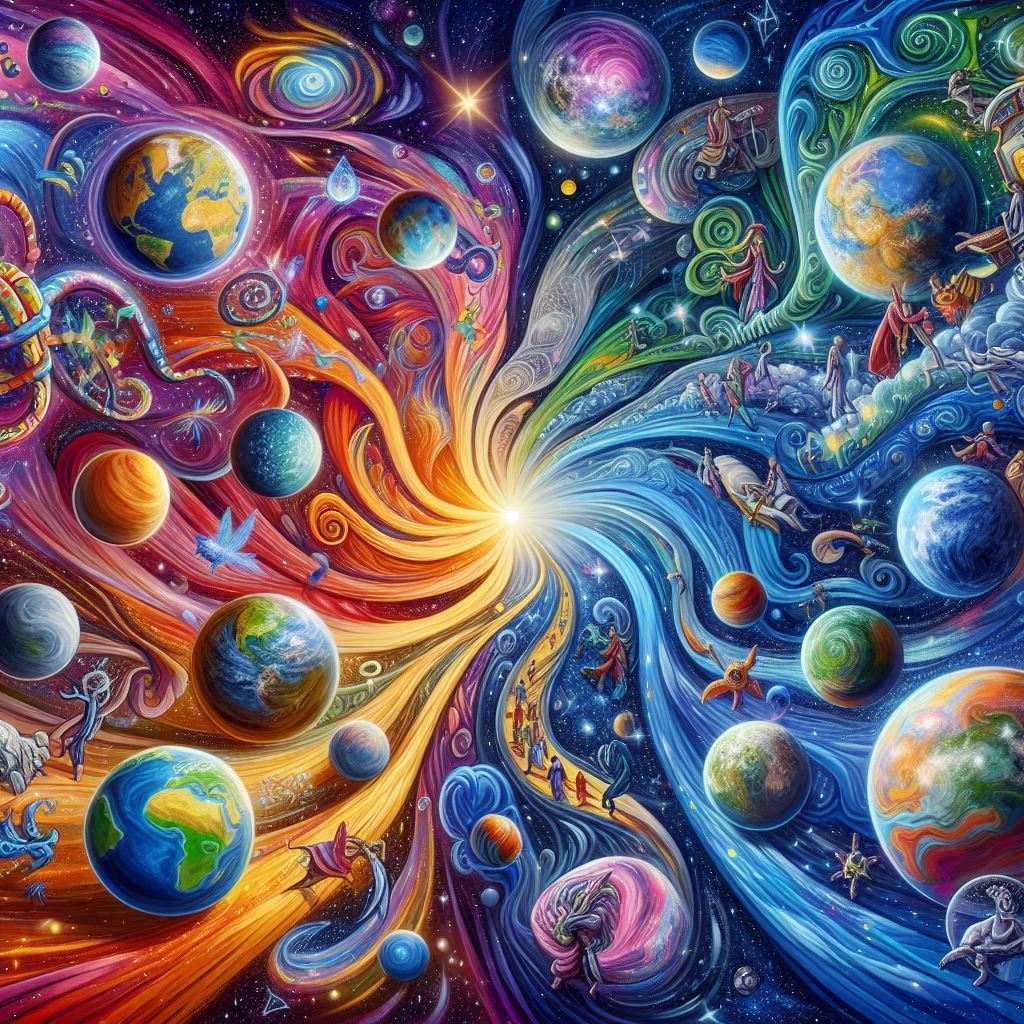
The concept of parallel universes, often referred to as the multiverse, has captivated the imagination of scientists, philosophers, and writers alike. This intriguing idea suggests that our universe is just one of many, each with its unique properties and realities.
Theoretical Foundations
Quantum Mechanics and Many-Worlds Interpretation
At the heart of the multiverse theory lies quantum mechanics, particularly the Many-Worlds Interpretation (MWI). Proposed by physicist Hugh Everett III in 1957, MWI posits that every quantum event branches into multiple outcomes, creating a vast array of parallel universes. Each decision we make could lead to a different universe, where alternate versions of ourselves exist.
Cosmic Inflation and Bubble Universes
Another compelling theory comes from cosmic inflation, which suggests that during the rapid expansion of the universe after the Big Bang, different regions of space could have inflated at different rates. This could lead to "bubble universes," each with distinct physical laws and constants. Our universe might just be one bubble in a frothy sea of universes.
Implications of Parallel Universes
Philosophical Considerations
The existence of parallel universes raises profound philosophical questions. If every possible outcome exists in some universe, what does that mean for free will? Are our choices merely illusions, with every possibility playing out in a different reality? Such questions challenge our understanding of existence and consciousness.
Scientific Exploration
While the multiverse remains a theoretical construct, scientists are actively exploring its implications. Experiments in particle physics and cosmology aim to uncover evidence that could support or refute the existence of parallel universes. The search for gravitational waves and cosmic background radiation may provide insights into the nature of our universe and its potential connections to others.
Cultural Impact
Literature and Media
The idea of parallel universes has permeated popular culture, inspiring countless works of fiction. From Philip K. Dick's novels to the Marvel Cinematic Universe, the multiverse concept allows for limitless storytelling possibilities. These narratives often explore themes of identity, choice, and the nature of reality, resonating with audiences on multiple levels.
Art and Philosophy
Artists and philosophers have also embraced the multiverse concept, using it as a lens to examine the human experience. The notion that countless versions of ourselves exist in different realities invites reflection on our choices, regrets, and aspirations. This exploration can lead to a deeper understanding of our place in the cosmos.
Conclusion: The Infinite Possibilities
The possibility of parallel universes challenges our perceptions of reality and existence. As science continues to probe the depths of the cosmos, the multiverse remains a tantalizing frontier. Whether or not we ever find definitive evidence of these alternate realities, the exploration of such ideas enriches our understanding of the universe and our role within it.


