
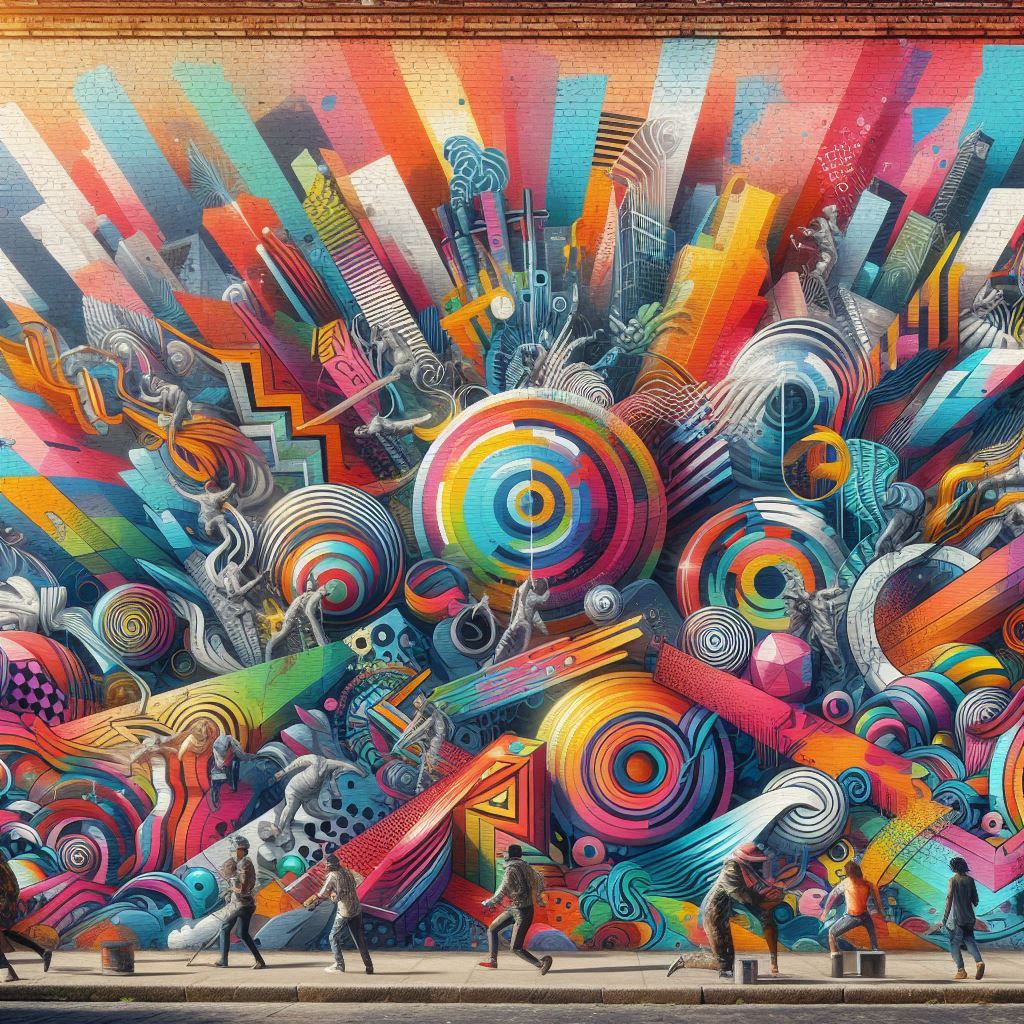
A dynamic art form that combines visual communication with social commentary, often expressed in public spaces. It has a rich history, evolving from ancient markings to contemporary styles, and is recognized for its ability to convey powerful messages and challenge societal norms.
History
-
Graffiti has ancient roots, with examples found in cave paintings, Roman inscriptions, and Greek writings.
-
The modern form of graffiti emerged in the 1960s, particularly in urban areas like Philadelphia and New York, fueled by the rise of hip-hop culture.
Types of Graffiti
-
Tagging: The most basic form, where artists use their pseudonym or symbol to mark territory.
-
Throw-ups: More complex than tags, often involving bubble letters or simple designs.
-
Pieces: Elaborate murals that showcase artistic skill and creativity.
-
Stencils: Pre-made designs that can be quickly applied to surfaces, popularized by artists like Banksy.
Graffiti Today
-
The perception of graffiti is shifting, with many now recognizing it as a legitimate art form.
-
Cities around the world are embracing graffiti, creating designated spaces for artists to express themselves legally.
Famous Graffiti Artists
-
Banksy: Known for his satirical and politically charged works, often featuring social commentary.
-
Keith Haring: His work addressed social issues like AIDS and apartheid, using vibrant colors and bold lines.
-
Jean-Michel Basquiat: Initially a graffiti artist, he transitioned to fine art, blending street culture with high art.