PRION DISEASES
group of rare, fatal neurodegenerative disorders caused by misfolded proteins in the brain. These diseases lead to severe brain damage and are transmissible, affecting both humans and animals
- Prions are infectious agents composed solely of protein, with no nucleic acids (DNA or RNA).
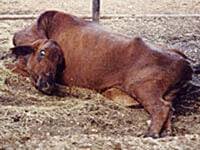
MAD COW - bovine spongiform encephalopathy (BSE), is a fatal neurological disorder in cattle caused by misfolded proteins known as prions.
Symptoms in Cattle:
- Changes in behavior, such as nervousness or aggression.
- Lack of coordination and difficulty walking.
Transmission to Humans:
- Humans can contract vCJD by consuming beef products contaminated with BSE prions.
Types of Prion Diseases
In Humans:
-
Creutzfeldt-Jakob Disease (CJD):
- Most common human prion disease.
- Can be sporadic (sCJD), hereditary (fCJD), or acquired (iCJD).
- Symptoms include rapidly progressive dementia, ataxia, and myoclonus.
-
Kuru:
- Historically found among the Fore people of Papua New Guinea, transmitted through cannibalistic practices.
- Symptoms include tremors, loss of coordination, and eventually death.
-
Fatal Familial Insomnia (FFI):
- A hereditary prion disease characterized by severe insomnia, autonomic dysfunction, and cognitive decline.
In Animals:
-
Scrapie:
- Affects sheep and goats, characterized by itching, behavioral changes, and neurological symptoms.
-
Transmissible Mink Encephalopathy (TME):
- Affects farmed mink and is similar to scrapie.
-
Chronic Wasting Disease (CWD):
- Affects deer and elk, leading to weight loss, behavioral changes, and eventually death.
Transmission
- Sporadic Cases: Most cases of CJD occur sporadically without any known cause.
- Genetic Transmission: Some forms are inherited due to mutations in the PRNP gene.
Symptoms
Symptoms of prion diseases vary but generally include:
- Rapidly progressive dementia
- Memory loss
- Personality changes
- Ataxia (loss of coordination)
- Myoclonus (sudden muscle jerks)
- Visual disturbances
- Difficulty speaking and swallowing
- In later stages, patients may become unresponsive and bedridden.
Diagnosis
- MRI: Magnetic resonance imaging can show characteristic changes in the brain.
- Electroencephalogram (EEG): May show specific patterns associated with CJD.
- Brain Biopsy or Autopsy: Definitive diagnosis is often made post-mortem through histopathological examination.
Treatment
- No Cure: There is currently no cure for prion diseases, and treatment is primarily supportive.